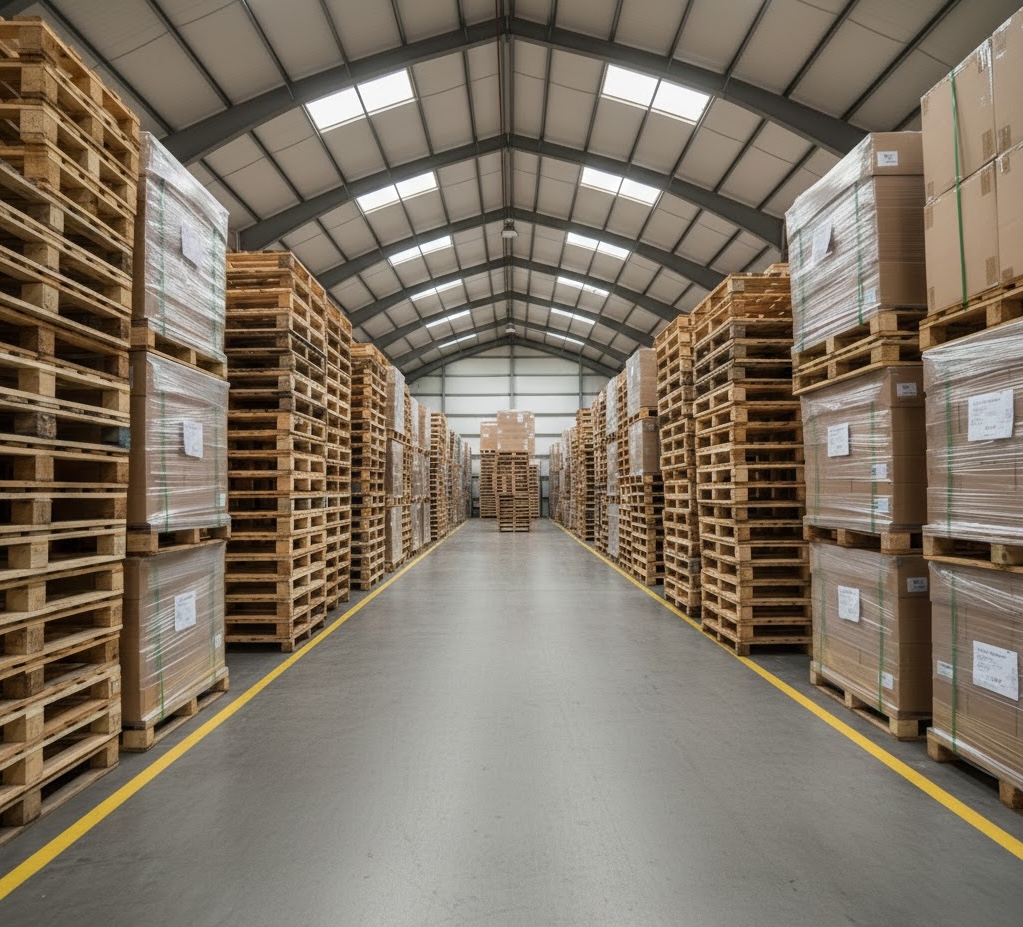
Pallet Buying Guide
Everything you need to know before purchasing
Get a Free Quote
Fill out the form below and we'll get back to you within 24 hours
Make Informed Pallet Purchasing Decisions
Choosing the right pallets impacts your bottom line, operational efficiency, and product safety. This comprehensive guide helps you navigate size selection, grade comparison, material choices, and cost optimization to find the perfect pallets for your business needs.
How to Choose the Right Pallets
Selecting the right pallets for your business involves considering multiple factors. This guide will help you make an informed decision.
⚠️ Avoid These Common Buying Mistakes
Key Factors to Consider
Product Requirements
- • Product weight and dimensions
- • Value of goods (affects grade choice)
- • Fragility and handling sensitivity
- • Special requirements (food-safe, clean room, etc.)
Operational Needs
- • Racking system compatibility
- • Forklift and handling equipment
- • Storage space and stacking requirements
- • Frequency of pallet movements
Shipping Considerations
- • Domestic vs. international destinations
- • Truck trailer optimization
- • One-way vs. returnable pallets
- • Carrier and retailer requirements
Budget & ROI
- • Initial purchase cost
- • Expected lifespan
- • Repair and maintenance costs
- • Resale or recycling value
Determine Your Size Requirements
The most common pallet size is 48" x 40", which fits most standard racking and shipping requirements. However, other sizes are available:
- 48" x 40" - GMA standard, most common
- 42" x 42" - Square pallet for telecommunications
- 48" x 48" - Larger square pallet for drums
- 36" x 36" - Half pallet, compact storage
- Custom sizes - Available for specific needs
Select the Right Grade
Pallet grades indicate the condition and quality of used pallets:
Grade A
Like-new condition, minimal wear, clean appearance
Grade B
Some wear, structurally sound, good value
Grade C
Visible wear, economical, basic applications
Choose Your Material
Different materials suit different applications:
Wood Pallets
Most economical and widely available. Perfect for general use.
Plastic Pallets
Hygienic, durable, and long-lasting. No maintenance required.
Metal Pallets
Maximum strength and durability. Fire-resistant.
Consider Special Requirements
- Export/International: Heat-treated (HT) pallets required for ISPM 15 compliance
- Food & Pharma: Consider plastic pallets for hygiene or new wood pallets
- Heavy Loads: Verify load capacity matches your requirements (typically 2,500-4,000 lbs)
- Automation: Consistent dimensions critical for automated systems
Calculate Your Quantity
Consider both immediate needs and future requirements. Bulk purchases often qualify for volume discounts.
💡 Pro Tip
Order 10-15% more than your immediate need to account for damage, loss, and maintenance rotation. This prevents production delays.
Ready to Order?
Our team can help you select the perfect pallets for your specific needs and provide competitive pricing.